



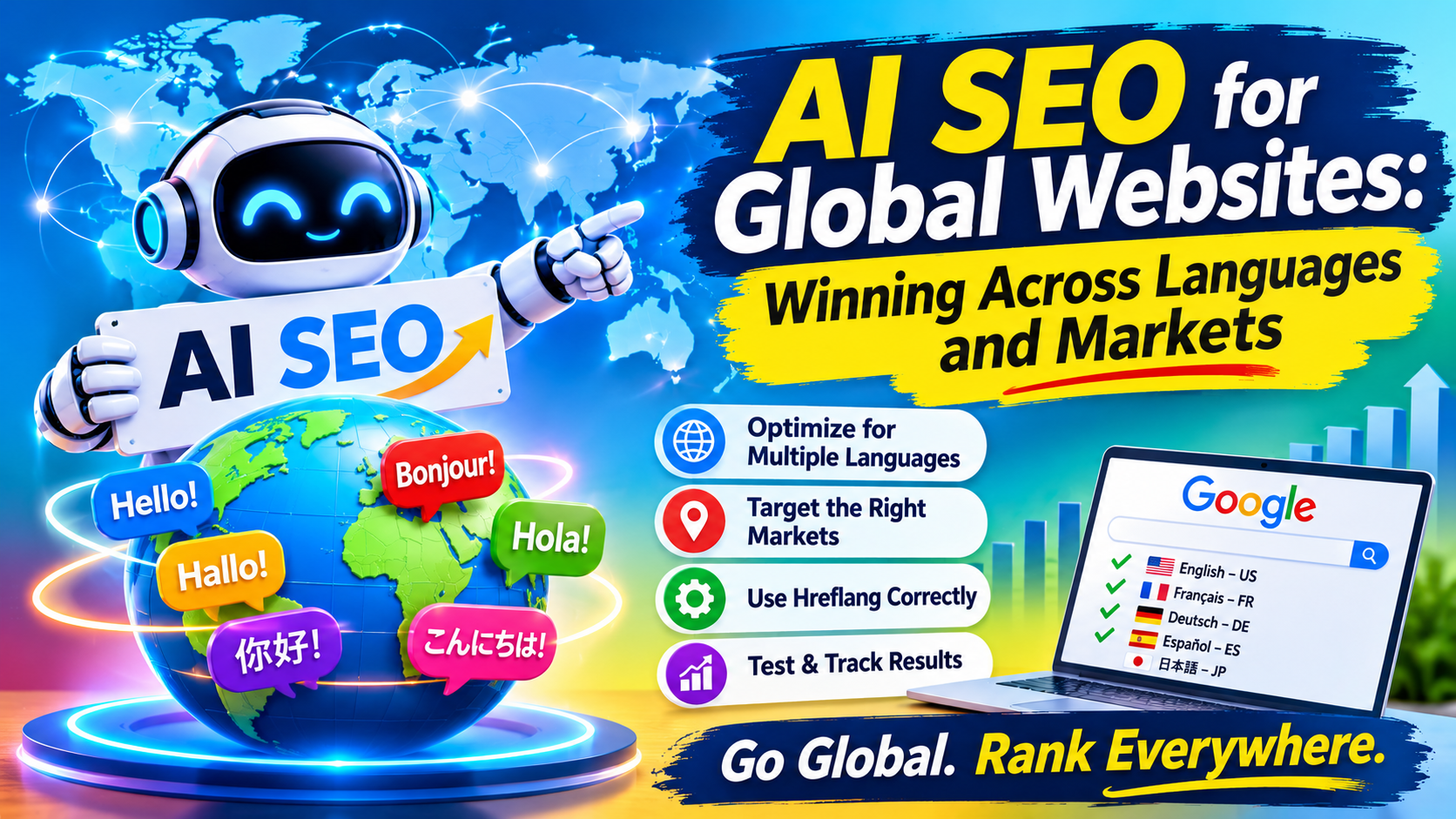
A brand that sells in several countries doesn’t appear in “Google AI” in general. It appears, or doesn’t, inside a particular language, location and feature. That makes AI SEO harder for global sites than for single-market ones. Here is how to approach it without wasting effort on translation alone.
AI Search Is Already International
Google’s AI features are not confined to English-speaking markets. Reporting on Google’s announcements says AI Overviews reached more than 200 countries and territories and more than 40 languages by May 2025. In October 2025, Google expanded AI Mode to more than 35 new languages and over 40 new countries and territories, bringing it to more than 200 in total, including Hindi, Indonesian, Japanese, Korean and Brazilian Portuguese.
Rollout depth varies, though. Gulf News noted that in some new countries early support covered only English queries. Availability is a moving target, so check where your own audience can use these features instead of assuming.
Why Multilingual Sites Face a New Problem
Traditional international SEO asked which page should rank in each market. AI search adds another question: which language version is used to build the answer?
Industry consultant Glenn Gabe tested how several AI platforms handled multilingual content, including pages with hreflang tags. In one of his examples, Google’s AI Mode returned the correct French URL, while most other AI platforms returned the wrong version. Copilot was the exception, which he linked to Bing’s strength in language handling. These were limited tests by one practitioner, not a controlled study, and platforms change quickly. They still show that correct language signals do not guarantee correct results outside Google.
Translate, Adapt or Rebuild
Not every page deserves the same treatment. The framework below is my own planning tool, not an industry standard.
Translate pages where facts are universal and wording is simple: product specifications, safety information, documentation. Use a native speaker to review the result, since machine output can distort technical terms.
Adapt pages where the facts hold but context changes: pricing, shipping, legal notes, payment methods, examples and measurement units. Swap in local currency, local regulations and examples your audience recognizes.
Rebuild pages where search behavior differs. People in different markets phrase questions differently, compare different alternatives and trust different sources. A comparison page built for one country may name competitors who barely exist in another. Research each market’s actual queries and write from scratch.
Sarkar SEO suggests labeling every important page with one of these three verdicts before commissioning any translation work. It prevents the common mistake of paying to translate pages that should have been rebuilt.
Technical Housekeeping That Still Matters
AI features lean on core search systems, so the international basics remain your foundation:
- Give each language its own URL. Don’t serve different languages from one address based on a cookie or browser setting. Crawlers may see only one version.
- Use hreflang correctly. Each version should reference the others, include a self-reference, and the references should be reciprocal. Add an x-default for fallback. Errors here are common and quietly damaging.
- Avoid forced redirects by location. Automatic redirection based on IP address can block crawlers from reaching other versions. Offer a visible language switcher instead.
- Keep names consistent. Use the same brand, product and service names across languages unless a local name is genuinely different. If it is, state both clearly on the page.
- Translate the details too. Titles, headings, image text, alt attributes and structured data fields should match the page language. Mixed-language pages confuse both users and systems.
Some vendor guides claim hreflang directly influences which sources AI Overviews use. I found no official Google confirmation of that, so treat it as unproven. Hreflang is still worth getting right for ordinary search.
Test Every Market by Language
Because results vary by language, location and account, a single check in English tells you little. Build a simple test matrix:
- Choose your top markets by revenue or growth potential.
- For each, write 10 to 15 natural questions in the local language, phrased the way a native speaker would ask them, not translated word for word.
- Run the questions on the AI engines your audience actually uses, from a location in that market where possible.
- Record whether your brand appears, which language version is cited, and whether the description is accurate.
- Repeat monthly with the same wording.
Expect uneven results. You may be well represented in one language and absent in another. That tells you where to invest first.
Check accuracy as carefully as presence. An AI answer in Spanish that quotes an old price or the wrong shipping region costs sales even though you were mentioned.
Mistakes to Avoid
- Launching every language at once. Start with the markets that matter most and build depth there.
- Publishing raw machine translation at scale. Thin, unreviewed pages offer no reason to be cited and invite quality problems.
- Ignoring local discovery sources. Each market has its own review sites, directories and communities. Learn which ones your customers use.
- Assuming one global message fits everywhere. Local proof, such as local customers and local regulations, builds more trust than a translated global slogan.
