



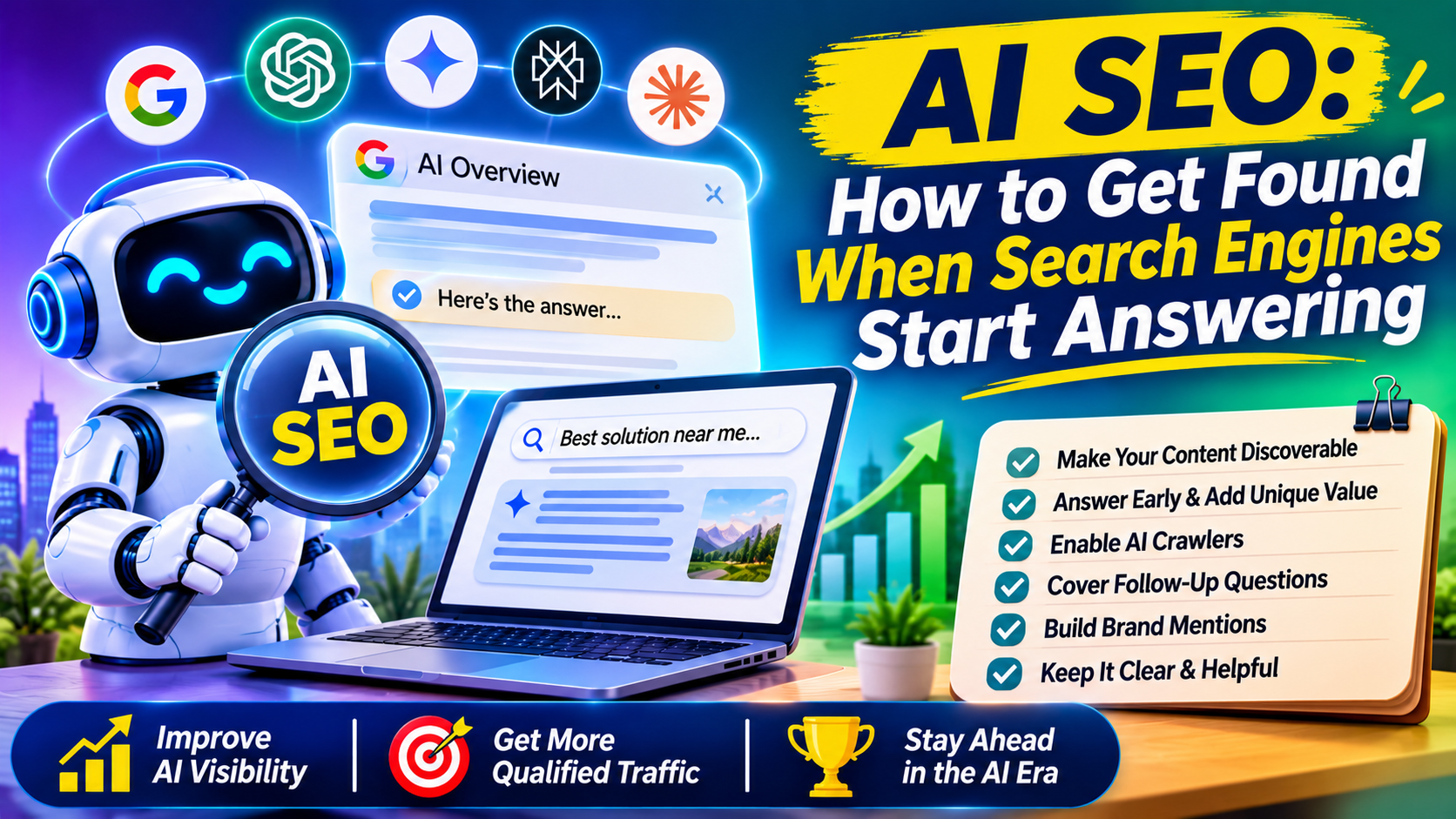
Search used to hand you ten blue links. Now it often hands you a paragraph. Google’s AI Overviews, ChatGPT, Perplexity, Gemini and Claude all read the web and write the answer themselves. If your page isn’t one of the sources they draw from, you can rank well and still go unseen.
That is the problem AI SEO addresses. It is the practice of making your content easy for both search engines and AI systems to find, understand, trust and cite. The rest of this article covers what has changed, what the evidence says, and what is worth your time.
Ranking and citation have drifted apart
For years the logic was simple: rank in the top ten, get the traffic. That link has weakened. In a March 2026 analysis of 863,000 search result pages and 4 million AI Overview URLs, Ahrefs found that only 37.9% of cited URLs appeared in the top 10 results for the exact query, and another 31% sat outside the top 100. The same dataset is reported to have shown a figure of 76.1% in July 2025, so the shift happened within months.
Treat these numbers with care. Other studies disagree: BrightEdge puts the overlap at just 17%. Most of these studies also come from companies that sell AI visibility tools, a conflict of interest one analyst flagged openly. Almost every study he reviewed came from a vendor. The direction is consistent across sources even where the exact figures differ. A top ranking helps, but it no longer decides who gets cited.
Why this happens: query fan-out
The reason lies in how these systems work. When you ask an AI Overview a question, the model doesn’t run one search. Google describes query fan-out as a set of concurrent, related queries the model generates to fetch additional relevant results. A page that ranks for one of those hidden sub-questions can be cited even if it never ranked for the main query.
For publishers this changes the target. Instead of one page chasing one keyword, you want depth: pages that answer the follow-up questions a curious reader would ask next.
What Google itself says
Google’s position is unusually plain. On May 15, 2026 it published an official guide to generative AI features in Search. Coverage of the guide noted that it centres on valuable, unique, non-commodity content. Google’s own AI features documentation lists the basics: allowing crawling in robots.txt and through any CDN or host, making content findable through internal links, and providing a good page experience. One summary of the guidance adds that no other special optimisations are necessary. googles new guide for ai search what seo really needs now +2
This doesn’t settle things for ChatGPT or Perplexity, which may weight signals differently. But it does mean you should be sceptical of anyone selling a secret formula for “ranking in AI.”
Six practical moves that hold up
- Check that AI crawlers can read your pages. A Vercel and MERJ study found that none of the major AI crawlers it tested render JavaScript, though Gemini does through Googlebot’s infrastructure. The study dates from December 2024, and the source I found did not mention a newer one, so verify it for your own site. If key content only appears after scripts run, some assistants may see a blank page. Serve the important text as plain HTML.
- Lead with the answer. One compilation of studies reports that 44% of citations come from the first 30% of a page. State the direct answer early, then add nuance. Readers appreciate this too.
- Add something nobody else has. Machines can summarise the average of the web for free. They need a reason to cite you. That reason is original data, a real case, a tested method or a clear point of view. Before publishing, ask what this page contains that a competitor’s version doesn’t.
- Build mentions, not just links. One third-party roundup of Ahrefs data reports that brand mentions correlate with AI citation at 0.664, against 0.218 for backlinks. Treat this as a secondary report and not a proven cause. The sensible reading is that being discussed across the web, in reviews, interviews and communities, makes a brand easier for models to recognise. Name your authors and show their credentials.
- Cover the follow-up questions. Plan topic clusters around what comes next in the reader’s journey. A single page that ranks for the main keyword can lose to several focused pages that answer the sub-questions.
- Keep structure for people, not machines. Google’s guidance favours clear paragraphs, logical sections and descriptive headings. Schema markup can help systems interpret a page, but it is not a magic switch.
The traffic reality
AI answers cost clicks. In Pew’s data, users clicked a link inside an AI summary on just 1% of visits. Yet being cited still pays. A study of 53 brands by Seer Interactive found cited pages earned 120% more organic clicks per impression than uncited ones, though 38% fewer than queries with no AI Overview at all. Google says clicks from pages with AI Overviews are higher quality, with users more likely to spend more time on the site. seo vs aeo vs geo rank in ai search +2
So the goal shifts. Fewer, better visitors may matter more than raw volume, and your reporting should reflect that. Track branded searches, assisted conversions and leads next to sessions.
What to ignore
You don’t need a page for every possible fan-out query. Google calls that approach an ineffective long-term strategy. You don’t need to rewrite your site for robots. And you shouldn’t trust any claim to guarantee citations, because the platforms change faster than the studies about them.
A realistic way to start
Pick your ten most valuable pages. Check that they are indexable and render as plain text. Rewrite each opening to answer the question directly. Add one original element to each, such as a data point, an example or an expert quote. Then monitor which assistants mention you for your key questions, using manual checks if you have no tooling.
At Sarkar SEO, we think of AI SEO as classic SEO done with more discipline, not a separate trick. Strong fundamentals, original substance and clear writing carry across every platform.
