



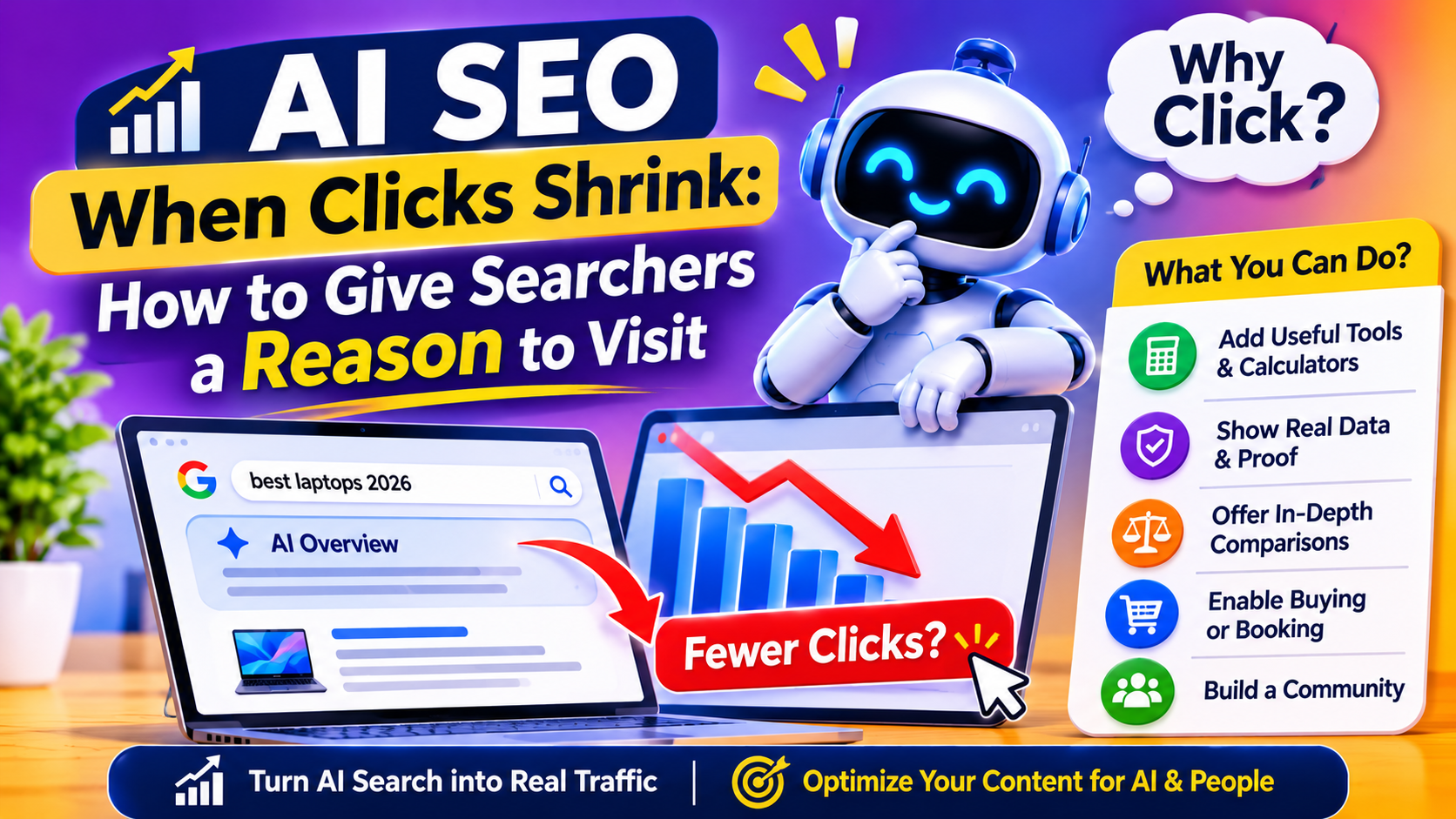
The uncomfortable question behind every AI SEO project is simple: if an AI answer satisfies the searcher, why would anyone click? Ignoring the question does not make it go away, and neither does panic. At Sarkar SEO, we think the useful response is neither denial nor despair. It is to decide, page by page, what a visitor can get from you that a summary cannot give.
What the Click Data Really Shows
The best-known evidence comes from the Pew Research Center, which analyzed browsing data from 900 US adults in March 2025. According to CNET’s coverage, users clicked a traditional result 8% of the time when an AI Overview appeared, versus 15% when none did, and only 1% of searches led to a click on a link inside the overview. Pew also found that 26% of users ended their session after seeing an AI summary, compared with 16% for regular results. yahoothedailystar
Google has pushed back. A spokesperson told CNET the study used a flawed methodology and a skewed query set that was not representative of Search traffic.
A later randomized experiment, reported in secondary coverage, found that AI Overviews cut outbound organic clicks by 39.8% among 1,065 desktop Chrome users. That paper is a working draft that had not completed peer review, and it measures clicks, not revenue. The honest summary: independent studies point the same direction, the size of the effect varies, and Google disputes some of the methods. dev
Not Every Page Is Equally Exposed
The effect depends on what the searcher wants. Coverage of the Pew data says question-style searches were most likely to produce AI summaries, with 60% of questions receiving one. That fits common sense. A definition or a simple fact is easy to summarize. A decision, a tool or a purchase is not.
Try a quick triage of your own pages:
- High exposure: definitions, “what is” explainers, simple facts, basic how-tos
- Medium exposure: comparisons and step-by-step guides that benefit from detail
- Low exposure: calculators, templates, transactions, bookings and anything personalized
This is our own working scheme, not a measured ranking. Its value is in forcing a decision: stop expecting definition pages to deliver traffic they may no longer deliver, and put your effort where a visit is still necessary.
The Reason-to-Click Test
For each priority page, name one thing a reader can only get by visiting. Five types cover most cases:
- Do. A calculator, checker, template or tool that produces a result for the reader’s own numbers.
- Verify. Primary data, methodology, source documents or screenshots that let a skeptical reader confirm the claim.
- Decide. A comparison with clear criteria, trade-offs and a considered recommendation, not a list of features.
- Buy or book. A real transaction with live price, stock or availability.
- Belong. Access to a community, expert advice or reviews from verified customers.
If you cannot name the reason, the page is at risk. Either add one or accept that the page’s role is awareness, not traffic.
Rewrite the Opening, Not the Whole Page
You do not need to hide your answer. Burying it frustrates readers and tends to backfire. Instead, give the direct answer in the first two sentences, then add a short bridge that tells the reader what the quick answer leaves out: the exceptions, the numbers behind it, the tool, the template.
For example, a pricing page might state the typical range up top, then promise a calculator that adjusts it for the reader’s size and region. The summary can quote the range. It cannot run the calculator.
Decide What Each Page Is For
Some pages exist to win the click. Others exist to be cited accurately and remembered. Both are legitimate, but confusing them leads to bad conclusions. A glossary entry that earns a citation and no visit has not failed if its job was brand exposure. A high-intent comparison page that earns citations but no visits probably has.
Write the job next to each priority URL: click, citation or both. Then judge it accordingly. This also protects you from chasing traffic recoveries that were never realistic.
What Not to Do
- Do not pad pages with fake teasers that withhold a basic answer. Readers notice, and it wastes the trust you are trying to earn.
- Do not abandon informational content entirely. It still feeds citations, brand familiarity and the topical depth that supports your commercial pages.
- Do not treat any single study as your own traffic forecast. Your market, query mix and audience will differ.
