



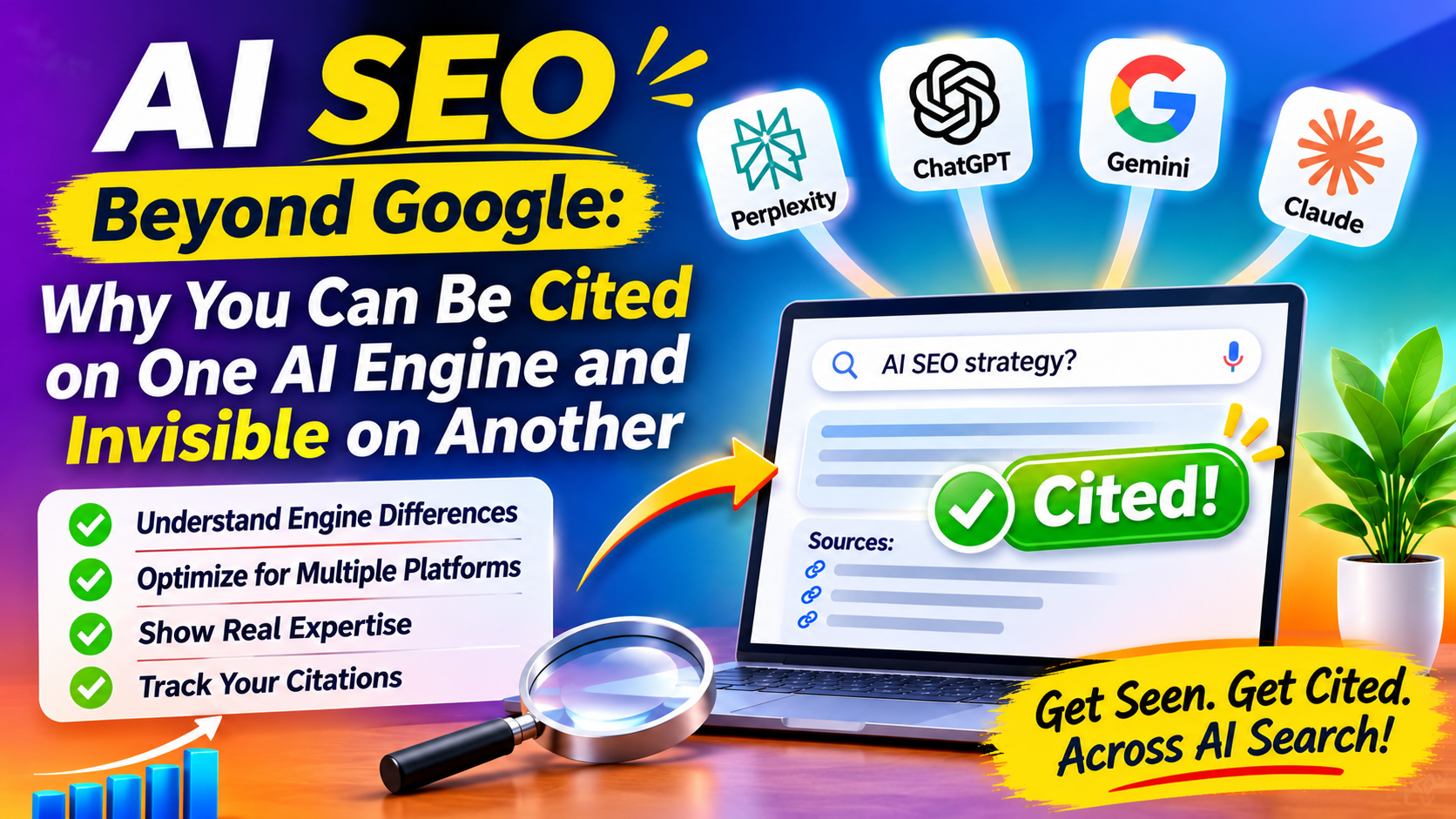
Many brands run into the same problem with AI SEO. A page gets quoted by one AI tool and is completely absent from the next. That isn’t random. Each AI search engine finds, filters and cites sources differently, and a strategy built for only one of them leaves visibility on the table.
This guide covers what that difference looks like, what the available data suggests, and how to build pages that work across engines.
The Overlap Is Smaller Than You Think
Most advice treats “AI search” as a single channel. The data points the other way. One analysis of AI answers reports that only 11% of cited domains appear across multiple AI engines, so visibility on Perplexity does not transfer to ChatGPT. A separate roundup reports a 615x difference in citation volume between platforms for the same brand on the same queries.
Treat these figures carefully. They come from vendor studies with different methods and sample sizes, not independent audits. Still, they all point the same way: engines behave differently, so measure each one separately.
How the Engines Differ
Perplexity: wide, source-heavy answers
Perplexity is built around retrieval. It defaults to a loop of querying, live search, synthesis and citation. It also cites generously. One report puts its citation rate at 97% of responses, compared with 16% for ChatGPT. innflowsgogochimp
That breadth helps smaller sites. The same report found that 92.78% of the pages Perplexity cited had fewer than 10 backlinks. That fits another finding: Perplexity tries to cite multiple domains in a single answer rather than one winner. If your content is specific and clearly extractable, you can win a slot without a giant link profile.
Format matters here. In one 50-query test, Perplexity favored answer-first, fact-dense, machine-extractable content over narrative storytelling.
ChatGPT: fewer sources, deeper use
ChatGPT works differently. One study found that it cites fewer sources but absorbs them more deeply into its answers, so a single citation can shape more of what users read. Another analysis says it is more likely to cite a source when that source makes a specific, attributable claim such as a statistic, a date or a named entity.
The sources it favors also skew toward established platforms. One analysis found Wikipedia making up 47.9% of ChatGPT’s top sources, with Reddit, Forbes, G2 and TechRadar following. That means a brand can gain visibility without owning the page. Being discussed accurately on respected third-party sites counts.
Claude and Gemini: training knowledge and live retrieval
Not every assistant searches the web on every question. Search-augmented assistants like Perplexity, ChatGPT search and Gemini retrieve live pages at query time, while others answer from training data. Claude, for example, leans heavily on its training corpus with optional web augmentation.
The practical result: for live-retrieval engines, crawlability and freshness drive citations. For training-based answers, what counts is how consistently and clearly your brand is described across the web over time.
What This Means for Your Strategy
Because engines differ, the best approach is to build a content base that satisfies all of them rather than chasing one engine’s quirks. Four habits do most of the work.
- Make claims specific and attributable. Vague advice gets skipped. A named method, a dated observation or a precise definition gives an engine something to quote. Write at least one sentence per section that could stand alone as an answer.
- Show your sources. One analysis says Perplexity prefers pages that themselves cite primary sources, such as research papers or institutional data. Linking out to credible evidence makes your page more trustworthy to readers too.
- Keep pages current and clearly dated. Assistants tend to favor sources that directly and currently answer the question, so a page on best practices for 2026 can out-cite a generic, undated overview. Refresh important pages with new examples instead of leaving them untouched.
- Earn mentions off your own site. Because some engines lean on third-party platforms, your reputation beyond your domain matters. Contribute genuine expertise to communities and publications in your field, and keep your brand description consistent everywhere.
At Sarkar SEO, we start with this cross-engine view rather than a single-platform checklist, because a page that reads clearly to people tends to read clearly to machines.
Remember Google Is Its Own Case
Don’t carry assumptions from one system to another. Google’s AI features rely on its core ranking and quality systems, so classic SEO remains the foundation there. The engines above use their own retrieval stacks, which is why they deserve separate checking.
Build a Simple Citation Tracker
You can’t improve what you never look at. One recommendation is to track whether ChatGPT, Perplexity, Gemini and Claude actually cite you, for which queries, and against which competitors. You don’t need special software to start.
- List 20 to 30 questions your customers really ask.
- Run each through several AI tools once a month.
- Record whether your brand or pages appear, and which competitors do.
- Note which page types win (guides, comparisons, definitions).
- Update or create content where you are absent.
Use the same questions every month so changes mean something. AI answers can vary between runs, so look for trends rather than single results.
Where Studies Disagree, and Why That’s Useful
Published numbers conflict. One dataset says Perplexity averages roughly 22 citations per answer and ChatGPT about 8. That analysis covered 118,000 responses collected between January and March 2026. Another dataset puts the figures at around five unique domains for Perplexity and three for ChatGPT. The gap likely comes from how each study defines and counts citations, and from how engines change over time. dev
The takeaway isn’t to pick a favorite statistic. It’s to avoid building strategy on any one number and to test your own market directly.
A Practical Starting Point
Pick your five most commercially important pages. Rewrite each so it opens with a clear answer, includes at least one specific attributable fact and cites a credible source. Then check them across several engines after a few weeks. If one engine ignores you, look at its source preferences and adjust.
This steady, evidence-based approach is how Sarkar SEO helps clients improve visibility across both traditional search and AI answers, without relying on tricks that age badly.
