



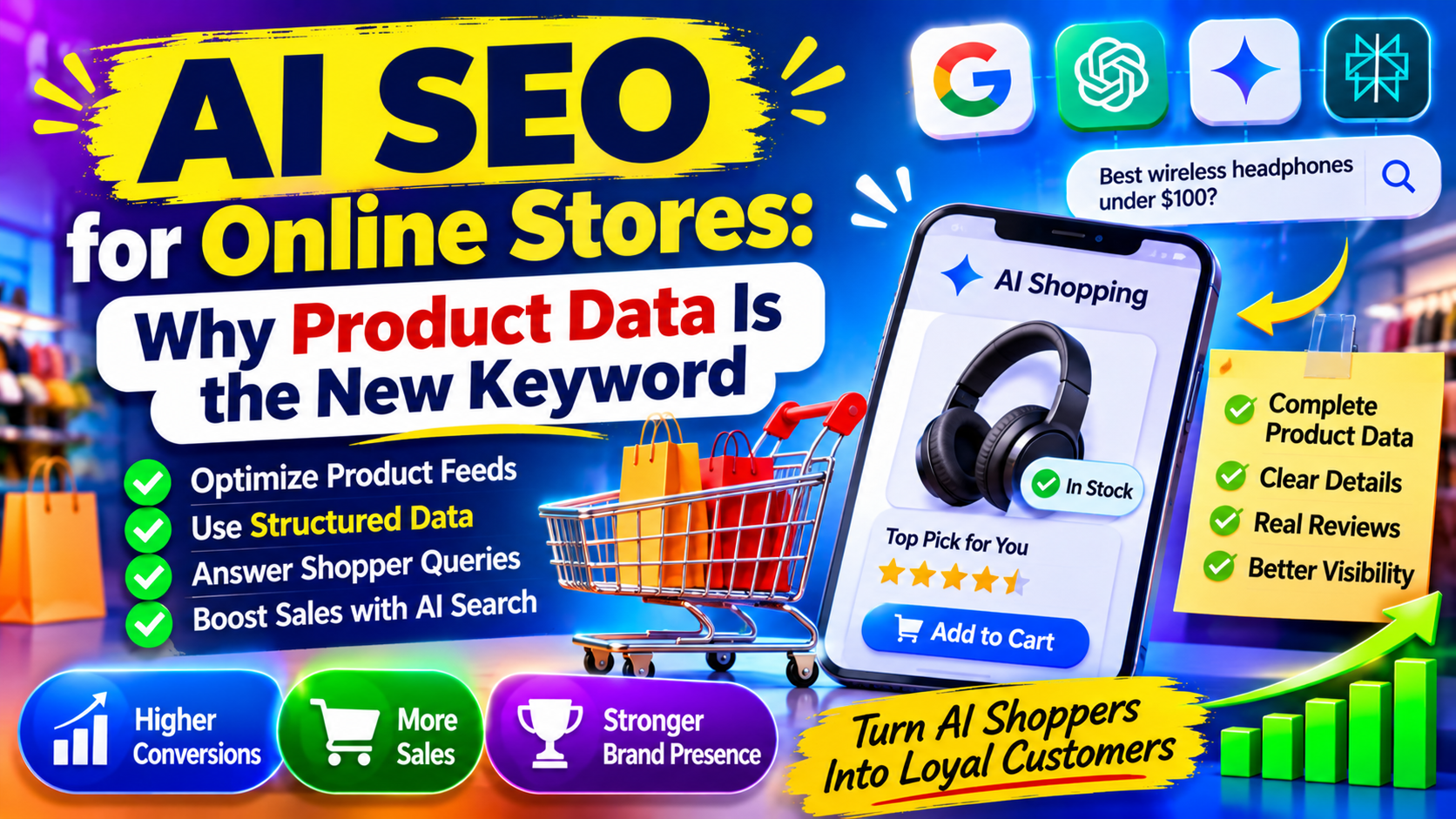
For years, ecommerce AI SEO meant category pages, product titles and backlinks. Those still matter, but AI shopping adds a new layer. Assistants now compare products, filter by detailed preferences and, in some cases, help complete the purchase. In that setting, the quality of your product data can decide whether you are considered at all.
What Changed in 2026
On January 11, 2026, Google announced the Universal Commerce Protocol (UCP) at the National Retail Federation conference. Google describes it as an open standard for agentic commerce covering the whole shopping journey, from discovery and buying to post-purchase support. In practice, it gives AI agents, retailers and payment providers a common language.
The rollout kept moving. At Google Marketing Live on May 20, Google introduced Universal Cart, which a feed-management vendor reported as live with retailers including Nike, Sephora, Target, Walmart and Wayfair, alongside new Merchant Center attributes. Google also announced AI Performance Insights in Merchant Center and conversational attributes for product descriptions. lengowsearchengineland
This is early infrastructure, not a settled market. One retail analysis noted that Google has published its coalition and roadmap but not a single transaction figure. Treat the opportunity as real but unproven.
Why Conversational Shoppers Break Old SEO Habits
A shopper typing “waterproof hiking boots, wide fit, under budget, in stock near me” isn’t searching for a keyword. They are stating constraints. Google says price, location, colour, brand and availability are the five attributes people specify most often when shopping this way. A page that mentions “hiking boots” five times but lacks structured data on width, colour options and stock won’t satisfy those constraints.
That is the shift in one line: you need more context, not more keywords. Your feed, product pages and policies must answer questions before they’re asked.
Where Your Products Live: The Merchant Center Foundation
Google’s AI shopping features draw on a central product database. Google cites its Shopping Graph as containing over 50 billion product listings, with more than 2 billion updated every hour. If your catalog isn’t in Merchant Center, you can’t participate in those features at all.
Google’s own SEO guidance says the same thing for the AI era: it recommends Merchant Center feeds and Google Business Profiles for product and local business visibility in AI responses. Service businesses with physical locations should treat their Business Profile the way stores treat feeds: complete, accurate and current.
Agentic Checkout: What to Know Before You Chase It
Some merchants will want the Buy button inside AI Mode or Gemini. A few facts matter before you commit:
- Eligibility is specific. According to one platform’s guide citing Merchant Center help, only listings carrying the native_commerce(checkout_eligibility) product attribute show the Buy button.
- Access may be gated. Another source described Google Native Checkout as early access: you prepare your account, submit an interest form, finish the technical implementation, then wait for approval.
- You stay the merchant. The merchant remains merchant of record, keeping customer data, settlement, fulfillment, returns and support.
- Rollout varies by country. Because our audience is worldwide, confirm availability, currency and legal requirements for your market in Google’s Merchant Center documentation before planning.
Our view at Sarkar SEO is simple: don’t rebuild your store around a feature in early access. Make your data ready, then opt in when eligibility and economics make sense.
A Product Data Checklist for AI Visibility
This checklist is our recommended practice, built from the sources above. It is not a guaranteed ranking formula.
- Fill every attribute you can. Size, material, color, compatibility, age group and use case. Gaps keep you out of filtered conversations.
- Write descriptions people would say aloud. Explain who the product suits and what problem it solves, in plain sentences, not keyword strings.
- Keep price and stock accurate. A mismatch between feed and page erodes trust and can cause disapprovals.
- Publish clear shipping and return terms. Agents and shoppers both need to know the cost and the exit.
- Match page and feed. What the shopper sees on your product page should agree with what Google receives.
- Show real reviews and proof. Use genuine customer feedback and original photos, not stock imagery alone.
- Add useful product-page content. Sizing guides, care instructions and comparison notes answer follow-up questions.
- Check mobile speed and crawlability. Basic technical health still decides what gets indexed.
Don’t Neglect the Content Around the Catalog
Shoppers often research before they buy. Buying guides, comparison pages and “how to choose” articles capture that early stage and feed the same AI answers that mention brands. The pages that stand out contain evidence a manufacturer sheet doesn’t: tests you ran, mistakes customers make, and honest “who should skip this” advice. Keep claims verifiable, and don’t invent test results.
Measuring What Matters
Use Merchant Center’s AI Performance Insights to see how your products appear in AI-driven surfaces, and confirm what the report covers in your account because features differ by region. Pair it with the usual metrics: feed disapprovals, product-page conversion, branded search and revenue per visit. Because AI answers vary, review trends monthly instead of reacting to a single result.
