



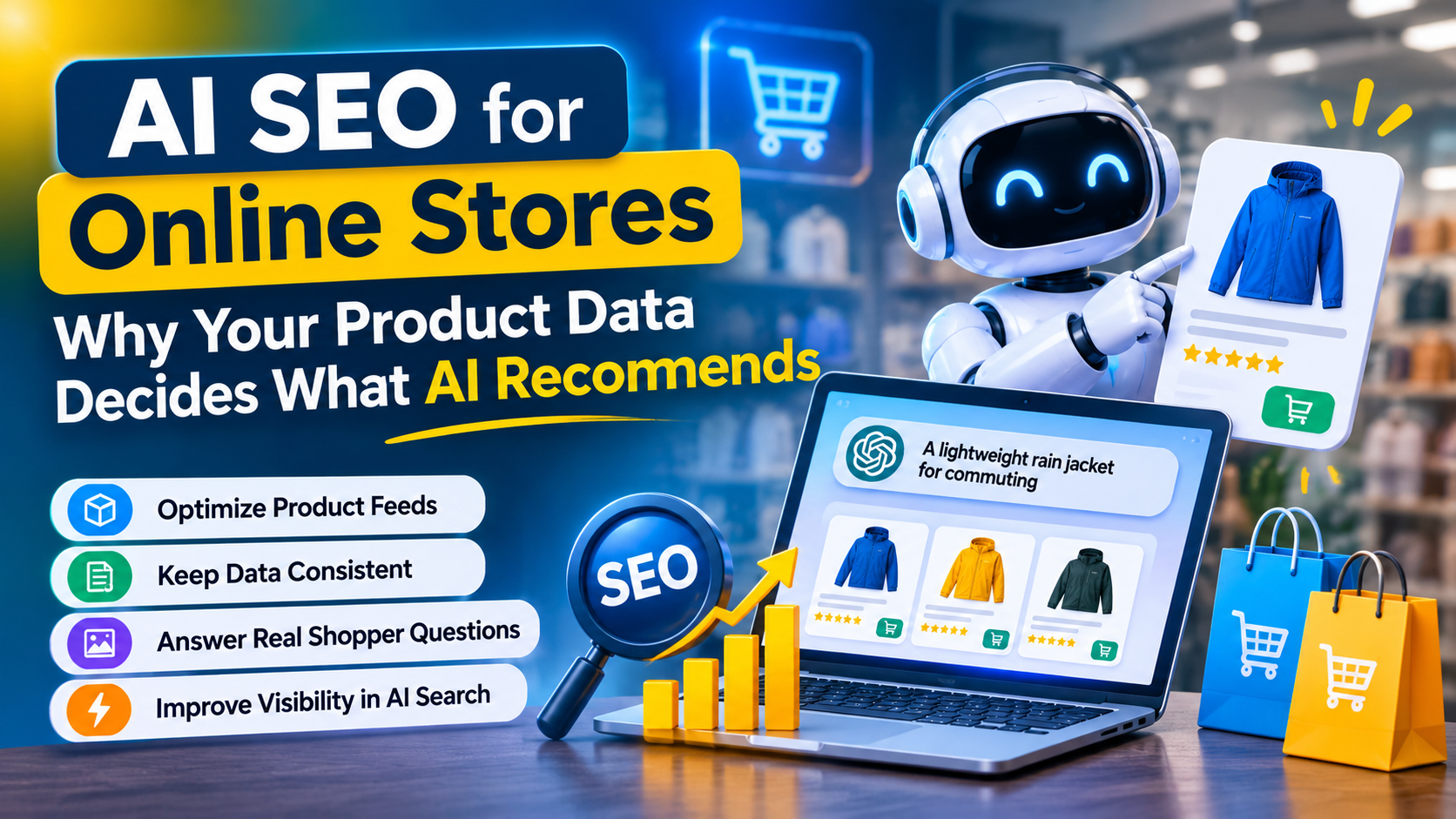
When a shopper asks an AI SEO assistant for “a lightweight rain jacket for commuting,” the answer is often a short list of products with prices and availability. For a store, that list is the new shelf. Getting onto it depends less on blog posts and more on how well your product data is built.
How AI Shopping Results Are Assembled
The evidence points to one main source: structured product data, mostly product feeds, combined with crawled product pages.
A study by Peec AI, cited in a Paz.ai analysis, found that 83% of ChatGPT product results matched Google Shopping organic listings. Search Engine Journal ran a headline saying ChatGPT shopping results lean heavily on product feeds. For Google’s own AI Mode, several guides report that products come from the same sources as Google Shopping, meaning indexed pages and Google Merchant Center data. Scandiweb’s guide adds that Google says there are no extra requirements or special markup for AI Mode.
The picture is not fully settled. One analysis states that Google has not confirmed Merchant Center as a direct ranking signal in AI Mode. Another vendor claims ChatGPT relies on Bing’s index and Bing Merchant Center instead. These sources conflict, and most are agencies or tool vendors with products to sell. The sensible reading is that clean, complete product data is likely to help across platforms, but the exact mechanics are not public and may change.
Treat the Feed as a Sales Document
Many stores view their feed as a compliance task, done to avoid disapprovals. For AI shopping, it also works as a description the system reads to decide what your product is and who it suits. Sarkar SEO recommends reviewing it the way a buyer would read a product page, asking whether it answers the questions a shopper actually has.
Check these fields first:
- Titles. Lead with what the product is and the attributes buyers search by, such as material, size, use or compatibility. Avoid stuffing internal codes or promotional phrases.
- Descriptions. Explain who the product suits and what problem it solves, in plain language.
- Attributes. Fill in everything that applies: color, size, material, condition, brand and product identifiers such as GTIN. Missing fields can limit which searches a product qualifies for.
- Images. Use clear, accurate photos showing the product as delivered.
- Price and availability. Keep them current. Stale data is one of the most common and most damaging errors.
The Consistency Audit
Here is a simple method I suggest, labeled as my own planning tool, not an industry standard. Pick your 20 best-selling products and compare four places for each one:
- The feed
- The product page text
- The structured data on the page
- Any third-party listing, such as a marketplace
Note every disagreement in price, stock status, size options, shipping cost or return terms. One analysis warns that when a feed says in stock and the page says sold out, both Shopping visibility and AI confidence can suffer. That claim comes from a vendor blog, but the logic is sound: contradictory data gives any system less reason to trust you, and gives shoppers a bad experience.
Fixing mismatches takes little creativity and often delivers more than new content. Automate the sync where you can, so a price change flows to every place at once.
Write Product Pages for Real Questions
Shoppers using AI ask conversational questions, such as whether a product fits narrow feet, works in cold weather or suits a small kitchen. Your product page can answer them directly.
- Add a short “who it’s for” section. Name the use case, the user and the limits. Honest limits build trust and reduce returns.
- Include specifications in plain text. Dimensions, materials, capacity and compatibility should be readable, not locked inside images.
- Show real reviews. Reviews provide the real-world language that descriptions lack. Display them on the page and never fabricate or incentivize without disclosure.
- State policies clearly. Shipping times, return windows and warranty terms influence recommendations and conversions.
- Compare honestly. A guide that explains how your products differ from each other helps shoppers choose, and gives AI something specific to quote.
Mind the Technical Basics
Product pages must be crawlable, indexable and fast to load. Make sure filters and variants do not create duplicate pages that dilute signals, and that out-of-stock products are handled deliberately. Either keep the page with alternatives and a back-in-stock option, or redirect it to the closest equivalent. Product structured data should match the visible page content. Google says no special markup is needed for AI features, but accurate markup helps standard shopping features and keeps your data consistent.
Measure What You Can
Google does not report which products appeared in AI answers, according to one industry analysis, so measurement relies on proxies:
- Run a monthly set of shopping prompts on the AI platforms your customers use and record which of your products appear.
- Track impressions and clicks on product pages in Search Console.
- Watch referral traffic from AI platforms in your analytics.
- Monitor feed health reports for disapprovals and warnings.
Results vary by prompt and by day, so look for trends across months, not single checks.
Mistakes Stores Make
- Optimizing the blog and ignoring the catalog. Content marketing helps, but product data is where AI shopping starts.
- Writing titles for algorithms. Keyword-heavy titles read badly and can reduce clicks.
- Letting data drift. Price or stock mismatches erode trust quickly.
- Copying supplier descriptions. Identical text across many stores gives a system no reason to prefer yours.
