



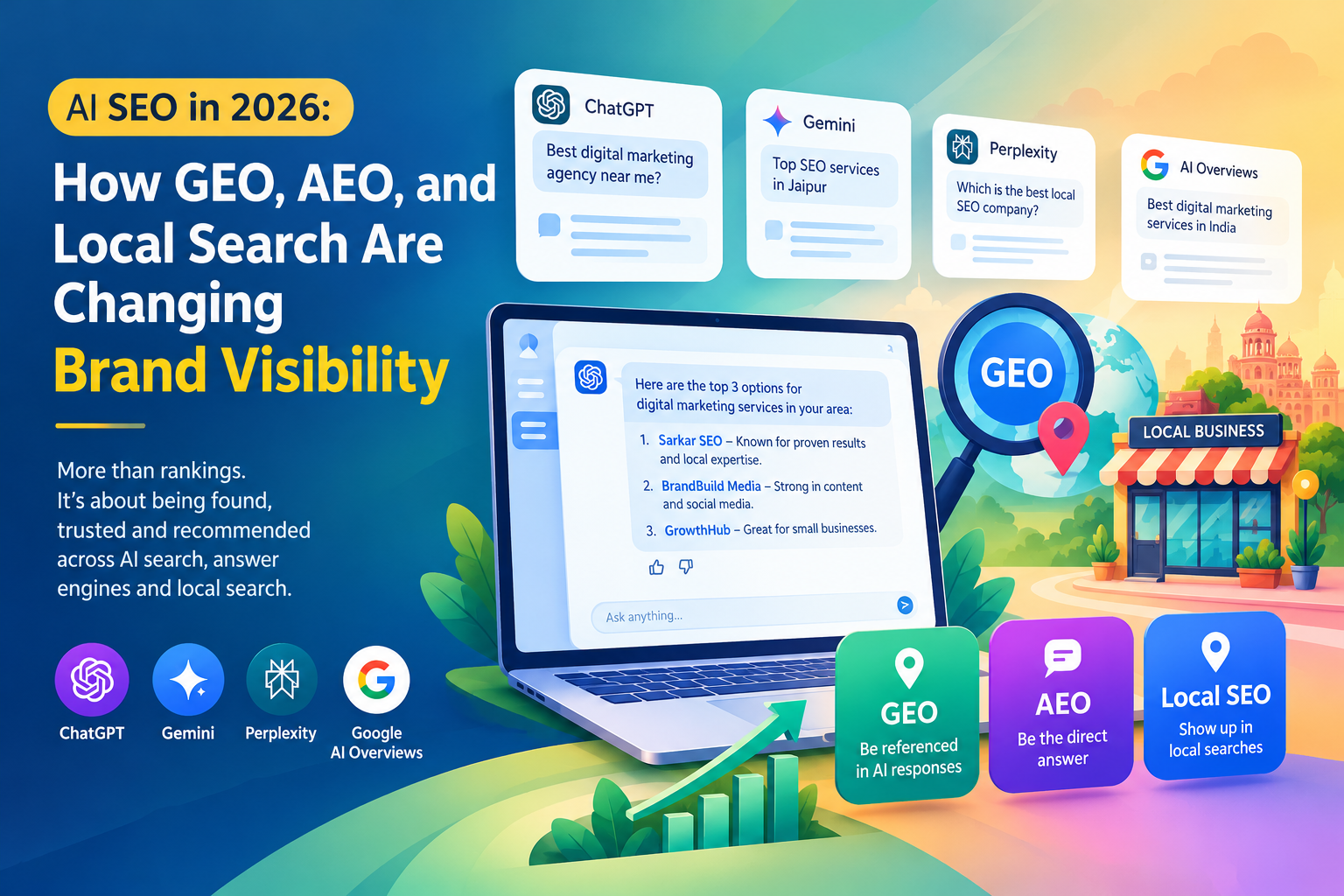
Search is no longer limited to typing a few keywords into Google and choosing a website from the results. People increasingly ask complete questions, compare recommendations, and use AI-powered platforms to research products, services, and businesses. For companies, this creates a new challenge: being visible is important, but being recognized as a relevant and trustworthy source is becoming equally valuable.
AI SEO brings traditional search optimization together with strategies designed for AI-generated answers, conversational search, and brand discovery. Businesses must now consider how their websites communicate information, how their expertise is established, and whether their content directly addresses real customer needs. At Sarkar SEO, this evolving search environment highlights the importance of building a consistent digital presence rather than relying exclusively on keyword rankings.
Why Is Search Visibility Changing in 2026?
AI-powered search experiences can summarize information, compare options, and provide recommendations without requiring users to visit several websites. Google AI Overviews and conversational AI platforms have changed how people discover information and evaluate potential solutions.
This does not mean traditional SEO has become irrelevant. Technical accessibility, useful content, relevant keywords, and authoritative references continue to matter. What has changed is the number of places where a business needs to establish its visibility.
Sarkar SEO approaches this shift by treating search visibility as a broader objective. A company should aim to appear in relevant search results, provide clear answers, and develop a recognizable presence across credible online sources.
The practical lesson is straightforward: businesses need content that serves people first while remaining easy for search engines and AI systems to interpret.
How Does AI SEO Work Beyond Traditional Rankings?
Traditional SEO primarily focuses on helping webpages become discoverable and competitive in search results. AI-focused optimization extends this objective by improving how clearly a brand, its services, and its expertise can be understood.
This involves several connected activities:
- Search intent analysis: Understanding what people actually want to know before creating content.
- Content architecture: Organizing information into logical sections with descriptive headings and direct explanations.
- Entity clarity: Making the relationship between a business, its services, locations, and areas of expertise explicit.
- Technical accessibility: Ensuring important pages can be crawled, indexed, and rendered appropriately.
- Authority development: Building a credible digital footprint through original insights, genuine reviews, and relevant third-party references.
Sarkar SEO recognizes that these elements work together. Publishing more pages alone does not guarantee better visibility. Each page should have a clear purpose, answer a meaningful question, and contribute something useful to the overall website.
What Is the Role of GEO in AI Search?
Generative Engine Optimization, commonly known as GEO, focuses on improving the likelihood that a brand or its content will be referenced in AI-generated responses.
When someone asks an AI assistant to compare service providers, the response may draw on multiple sources rather than reproduce a traditional list of search results. Clear explanations, consistent brand information, relevant evidence, and credible independent references can all contribute to how a business is represented.
For example, a software company could publish a detailed explanation of its ideal use cases, implementation requirements, pricing factors, and limitations. This gives potential customers useful information while making the company’s expertise easier to understand.
However, no optimization method can guarantee that an AI platform will recommend a particular business. Results depend on the platform, query, available sources, and changing retrieval systems.
Sarkar SEO’s approach to GEO should therefore emphasize measurable improvements in discoverability and brand representation instead of unsupported promises about guaranteed AI recommendations.
How Can AEO Help a Business Become a Useful Answer?
Answer Engine Optimization, or AEO, focuses on making content suitable for direct answers in search features, voice experiences, and AI-assisted information discovery.
The most effective starting point is to identify questions that customers ask before making a decision. These questions often concern costs, comparisons, processes, suitability, common mistakes, and expected outcomes.
A well-structured page should address the central question early, explain the reasoning, and provide additional context where necessary. For instance, an article about local SEO should explain what local SEO accomplishes before discussing advanced techniques.
Question-based headings can help readers navigate a page quickly. Concise introductory answers followed by detailed explanations also make the content easier to scan.
Structured data may help search engines interpret specific information when implemented correctly, but it does not guarantee a featured result or AI citation. Sarkar SEO can use AEO principles to make website content more useful, precise, and accessible without sacrificing depth.
Why Is GEO SEO Important for Local Businesses?
Local search introduces another important dimension. Customers frequently search for services in a particular city, neighbourhood, or service area. AI assistants can also receive questions that include location, budget, urgency, and personal requirements.
Geo SEO helps businesses establish relevance to these geographic needs.
A local service website should clearly identify its business location, the areas it genuinely serves, its services, and the practical information customers need. Accurate contact details, a properly maintained business profile, consistent business information, and authentic customer reviews can support local credibility.
Location pages should also provide meaningful differences. A page for Jaipur, for example, should explain the services available in that market rather than simply replacing a city name in a generic template.
Sarkar SEO considers geographic relevance most effective when it reflects real operations and local customer needs. Creating dozens of near-identical city pages without useful information can weaken the overall quality of a website.
How Should Businesses Measure AI SEO Performance?
Rankings alone cannot explain the complete impact of modern search optimization. A business may gain visibility in AI-generated responses without receiving a corresponding increase in traditional organic clicks. Conversely, a ranking improvement may not translate into qualified leads.
