



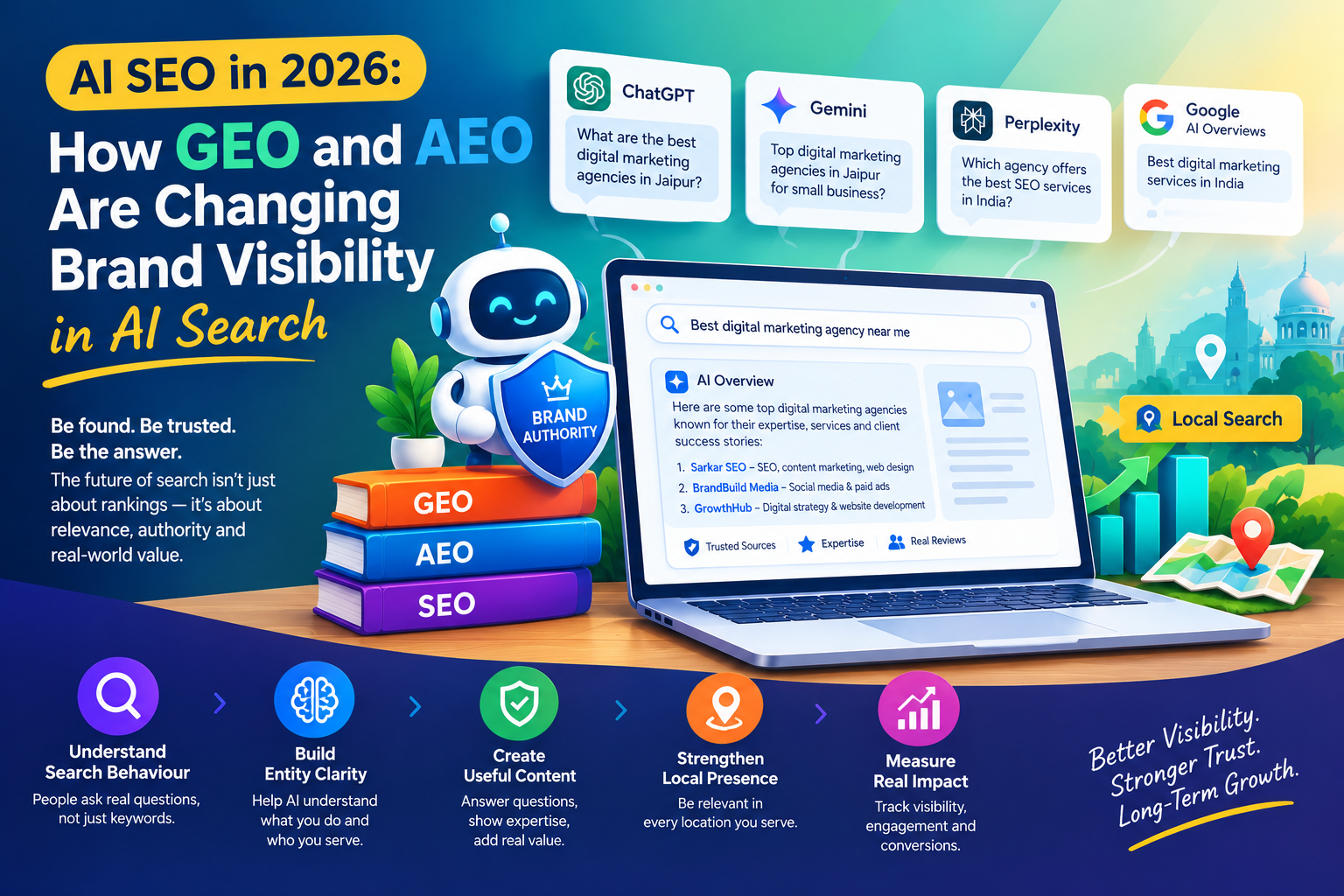
Search is entering a new phase where visibility depends on more than earning a position on a traditional results page. People increasingly ask AI-powered platforms to compare services, explain complicated topics, and recommend businesses that match their needs. This shift makes AI SEO an important part of modern search strategy, particularly for brands that want to remain discoverable across different search experiences. The challenge is no longer limited to attracting clicks; it is also about building enough relevance, clarity, and credibility to become a useful source in AI-generated answers.
The Shift From Search Rankings to AI Recommendations
Traditional SEO focuses on helping web pages appear prominently for relevant searches. AI-driven discovery adds another dimension: systems may summarize information from multiple sources before presenting a response. Instead of reviewing ten different websites, a user might ask a conversational question and receive a short list of recommendations with supporting explanations.
For businesses, this changes how digital visibility should be approached. A strong ranking remains valuable, but it does not automatically guarantee that an AI platform will mention a brand. Content quality, consistent business information, topical expertise, and references from credible sources can all contribute to a stronger online presence.
The approach discussed by Sarkar SEO in its recent AI search case study reflects this broader shift toward understanding how brands appear in generated responses, rather than treating conventional rankings as the only measure of success.
Why GEO SEO Matters for Brand Discovery
Generative Engine Optimization (GEO) focuses on improving the likelihood that a brand’s information will be discovered, understood, and referenced by generative AI systems. These experiences include AI-powered search summaries and conversational research tools.
GEO requires businesses to think beyond individual keywords. Search engines and AI systems need understandable information about what a company does, which audience it serves, and what distinguishes its expertise. A website with detailed service descriptions, relevant supporting articles, and consistent business information provides clearer signals than one containing repetitive promotional copy.
For example, a local accounting firm could publish practical guidance about tax deadlines, business registration, and financial recordkeeping. Each article should answer a genuine question and demonstrate relevant expertise. When the firm also maintains accurate location details and earns legitimate industry mentions, its overall digital presence becomes easier to evaluate.
However, no optimization method can guarantee a particular AI recommendation. GEO is an ongoing process of improving discoverability and credibility across the sources that influence online research.
How AEO Helps Content Become a Useful Answer
Answer Engine Optimization (AEO) concentrates on presenting information in a format that makes direct answers easier to identify and extract. It complements traditional SEO by prioritizing the questions people actually ask.
AEO-friendly content begins with a clear explanation, followed by supporting details, examples, and practical steps. Descriptive headings help readers navigate the page, while concise paragraphs make individual points easier to understand.
Consider a business answering the question, “How long does local SEO take to show results?” A useful response should explain that timelines vary according to competition, website condition, location, and existing authority. It should avoid promising an exact result without evidence.
This style benefits users first. It can also make information more accessible to search features that display direct answers, although inclusion in any particular result remains outside a publisher’s control.
What Makes Content More Understandable to AI Systems?
Publishing more articles is not necessarily the answer to declining visibility. A better starting point is to examine whether existing content provides distinct, accurate, and complete information.
Several practices can strengthen an AI SEO strategy:
Build topical depth: Create connected articles around important subjects instead of publishing unrelated posts designed only to target keywords.
Use specific explanations: Define technical terms, explain processes, and include relevant examples that clarify the subject.
Demonstrate first-hand knowledge: Add original observations, documented results, expert commentary, and genuine case studies where available.
Maintain consistent information: Keep business names, services, contact details, and location information accurate across relevant online properties.
Strengthen technical accessibility: Ensure important pages can be crawled and indexed, use logical internal links, maintain mobile usability, and avoid unnecessary technical barriers.
Apply structured data appropriately: Use relevant schema markup to describe information on a page accurately. Structured data can improve machine understanding, but it does not guarantee rich results or AI citations.
Sarkar SEO’s approach to AI-focused visibility highlights the importance of connecting content structure with brand recognition. For any business, the underlying principle is to make information useful to people and clear enough for search systems to interpret.
Can Local Businesses Benefit From GEO SEO?
Local search is an important area for GEO because many customer questions contain geographic context. Someone might ask which dentist serves a particular neighbourhood, which restaurant accommodates families, or which repair service operates nearby.
Local businesses should make their service areas explicit, maintain accurate business profiles, and publish location-specific information that reflects real operations. Pages for individual locations should contain meaningful details rather than identical text with city names replaced.
Customer reviews also provide context about real experiences. Businesses should encourage honest feedback and respond professionally without manufacturing testimonials or attempting to manipulate public sentiment.
For a company serving multiple cities, each location page should explain the services available there, relevant operating details, and any genuine differences in coverage. This gives prospective customers clearer information while helping search systems connect the business with the correct geographic area.
How Should Businesses Measure AI SEO Performance?
Measuring success requires more than counting conventional keyword rankings. Businesses should evaluate several indicators together.
Organic impressions and clicks show how traditional search visibility changes over time. Referral analytics can identify visits from AI platforms when those sources are reported separately. Conversion tracking helps establish whether visitors are taking meaningful actions, such as submitting enquiries or requesting consultations.
Teams can also monitor brand mentions and citations across a consistent set of relevant AI queries. These checks should use documented prompts, dates, locations, and platforms because responses may vary between sessions.
Sarkar SEO’s case-study approach offers a useful reminder that claims about AI visibility are stronger when supported by verifiable evidence. Businesses should record their starting position, document changes, and distinguish observed results from assumptions about what caused them.
What Mistakes Can Weaken an AI SEO Strategy?
Several common practices can undermine long-term performance. Publishing large volumes of lightly edited content may create repetition without establishing expertise. Overusing keywords can make articles difficult to read, while unsupported claims can damage trust.
Another mistake is treating GEO, AEO, and traditional SEO as completely separate disciplines. Their terminology differs, but they share important foundations: accessible pages, relevant information, technical quality, and credibility.
Businesses should also avoid assuming that a single successful AI response proves consistent visibility. Results can differ according to the question, platform, available sources, and time of testing.
A more reliable strategy combines useful editorial content, technical maintenance, authentic external references, and regular measurement. It focuses on earning visibility rather than trying to force a particular outcome.
