



Within a short time, nearly every marketing agency has added “AI” or “GEO” to its homepage. Some have built genuine capability. Others have renamed existing AI SEO services and raised the price. If you’re being pitched, you need a way to tell the difference before you sign anything.
Here is a practical framework built from published buyer guides and the logic of the work itself. We’d encourage you to apply it to every provider you speak with, including Sarkar SEO.
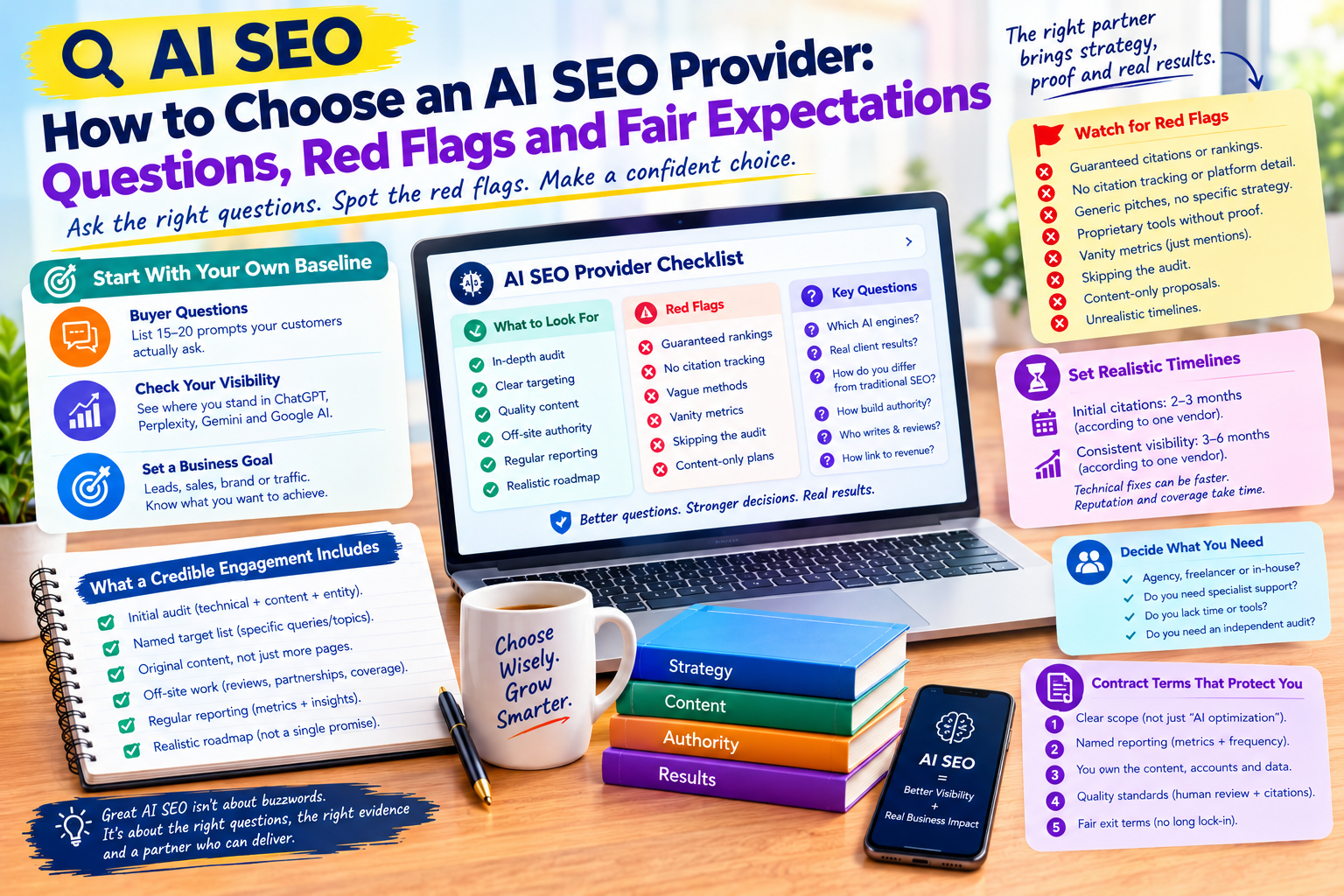
Start With Your Own Baseline
Before any sales call, gather three things. Hiring without them leaves you judging promises instead of evidence.
- A list of buyer questions. Write 15 to 20 prompts your customers actually ask, covering category, problem and comparison questions.
- A quick test of where you stand. Run those prompts in ChatGPT, Perplexity, Gemini and Google’s AI features. Note whether you’re mentioned, cited or absent, and which competitors appear.
- A business goal. Decide whether you want leads, sales, brand recognition or defense of existing traffic. An agency can’t be judged against a goal you haven’t set.
A serious provider will want this information too, and will often begin with their own audit.
What a Credible Engagement Includes
Published guides from MarketerHire, WebFX and others describe similar components. Look for:
- An initial audit of technical access, content gaps, entity information and current AI visibility.
- A named target list: the specific queries or topics you are trying to win.
- Content work that adds original information, not just more pages.
- Off-site work such as reviews, partnerships and earned coverage, since a Hackernoon guide notes that citations involve distribution as well as content.
- Regular reporting that links activity to outcomes.
- A realistic roadmap with milestones rather than a single promised result.
Questions to Ask on the First Call
“Which AI engines do you monitor, and how?” A good answer names engines and explains the method, such as fixed prompt sets tested repeatedly. Upgrowth warns that only about 11% of citations overlap between platforms and that nearly half shift monthly, so treat those as vendor figures, but the point stands: a single snapshot proves little.
“Can you show recent results for real clients?” Look for dated screenshots or redacted reports naming engines and prompts. Hackernoon’s guide stresses that mentions and citations differ, so ask which one you’re seeing.
“How do you separate your work from ordinary SEO?” Strong providers explain the overlap honestly. Google says normal SEO practices still apply to AI features, so a provider claiming a completely separate discipline deserves a follow-up question.
“How do you build authority outside my site?” The answer should describe real reviews, coverage and expert contributions, not purchased links or fabricated mentions. Google’s guidance treats inauthentic mentions as a spam risk.
“Who writes and checks the content?” Ask about subject-matter review, fact-checking and how AI tools are used. The answer should involve named human accountability.
“How will you tie this to revenue?” Visibility metrics are useful, but you should also see qualified traffic, enquiries or pipeline influence. If a provider can’t connect citations to business outcomes, one buyer guide warns, they’re guessing.
“What would you need from us, and what could go wrong?” Honest providers name dependencies such as developer access, subject experts and approvals, and discuss risks.
Red Flags Worth Walking Away From
- Guaranteed citations or rankings. Multiple guides, including those from WebFX and Upgrowth, make the same point: no one controls how third-party AI systems cite sources. A promise of ChatGPT mentions in 60 days is a promise about a system the vendor doesn’t operate.
- No citation tracking. Reporting only Google rankings misses the work you’re paying for.
- Platform-agnostic generalities. Advice that never names an engine or prompt suggests a recycled playbook.
- Mystery methods. “Proprietary tools” should come with a demo, and “exclusive tactics” with an explanation.
- Vanity metrics. Counting appearances in obscure AI tools, or reporting raw mentions as wins, inflates results.
- Skipping the audit. Recommending content before examining your situation is a sign of a template.
- Content-only proposals. More posts with no plan for credibility or distribution is half a strategy.
One caution about the guides themselves: most are written by agencies with something to sell, and some set criteria their own services happen to meet. Use them as question lists, not as verdicts.
Set Realistic Timelines
Upgrowth suggests initial citations may take two to three months and consistent visibility three to six. That’s one vendor’s view, not a standard, but it reflects the general pattern. Technical fixes can show up quickly, while reputation, reviews and earned coverage accumulate slowly. A provider promising results in weeks should explain exactly what they mean by results.
Do You Need an Agency at All?
Not always. MarketerHire notes that an agency may be most useful for the first six months, to build a baseline, and that a fractional specialist can beat a full retainer in some cases. A capable in-house marketer can handle much of the work if they have time, tools and expert input.
An outside team adds most when you lack capacity, need specialist technical or PR help, or want an independent audit. If your content is thin and your reviews are weak, no provider will fix that faster than a business that improves what customers actually experience.
Contract Terms That Protect You
- Scope in writing: deliverables per month, not just “AI optimization.”
- Named reporting: metrics, frequency and sample format agreed upfront.
- Ownership: you own content, accounts, data and tracking setups.
- Quality standards: human review, source citation and disclosure of AI use.
- Exit terms: a reasonable notice period with no long lock-in before results are visible.
