



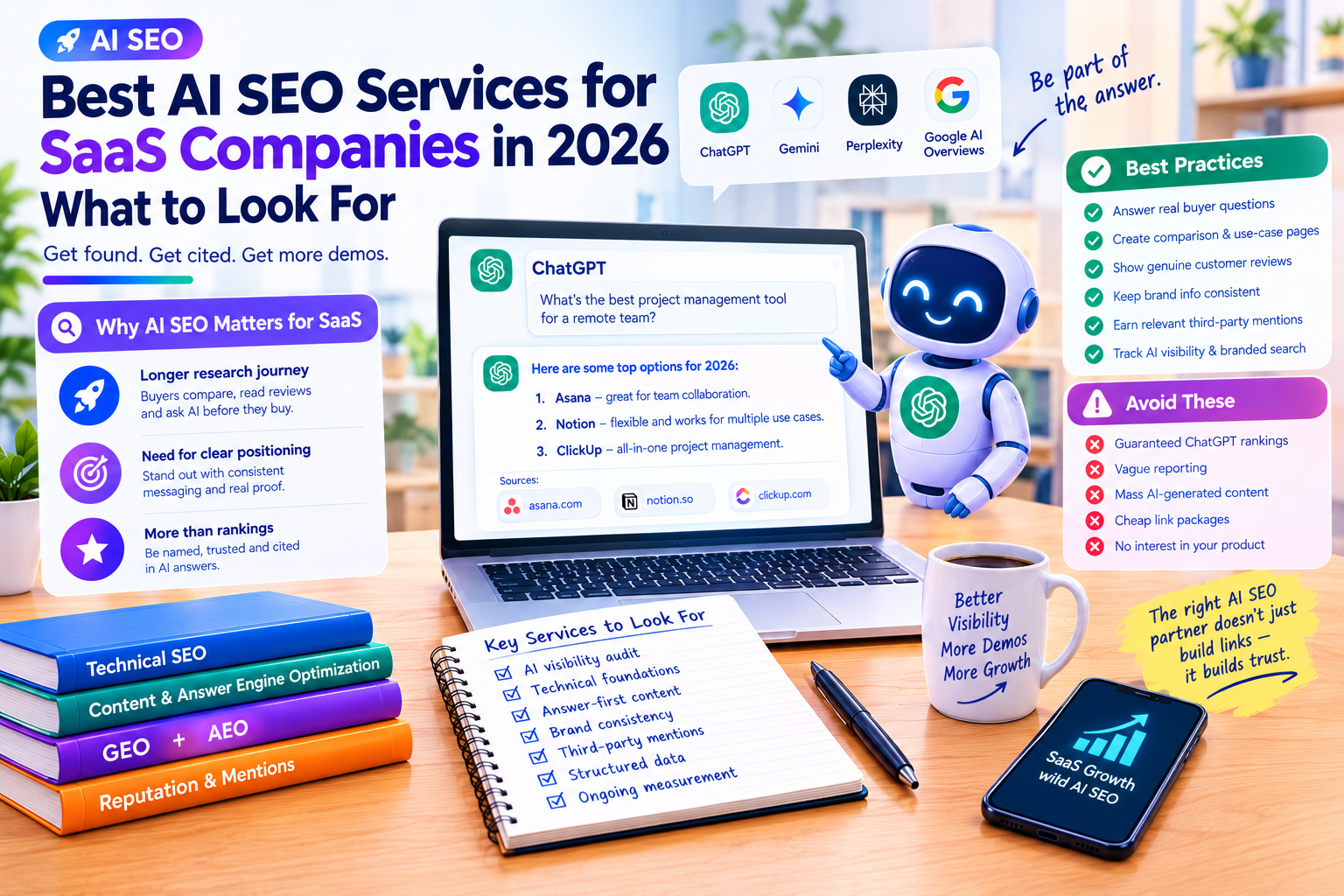
SaaS buyers do their research differently now. Before booking a demo, many ask ChatGPT, Gemini or Perplexity questions like “What’s the best project management tool for a remote team?” and work from the shortlist they get back. If your product isn’t in that answer, you may never reach the demo stage. This FAQ explains which AI SEO services matter for SaaS companies and how to choose a partner wisely.
Why is AI SEO different for SaaS companies?
SaaS has a long, research-heavy buying journey. Buyers compare features, read reviews, check integrations and look for alternatives before they ever contact sales. AI tools compress that research into a few lines, which means your brand must be understood clearly, not just ranked.
SaaS products are also easy to confuse. Many tools sound alike, so AI systems rely on clear positioning, consistent descriptions and third-party validation to tell them apart. That is why generic SEO packages often fall short for software companies.
What services should a good AI SEO provider offer?
Look for a mix of technical, content and reputation work:
- AI visibility audit. A review of how ChatGPT, Gemini, Perplexity and Google’s AI features describe your product today, including where you are missing and where competitors appear instead.
- Technical foundations. Crawlability, site speed, clean architecture and correct access for AI crawlers, so your pages can be read and used.
- Answer-first content. Pages built around real buyer questions, such as pricing, comparisons, use cases and integrations.
- Entity and brand consistency. One clear description of your product, used consistently across your website, review platforms, directories and profiles.
- Third-party mentions. Placements in relevant publications, comparison articles, communities and review sites.
- Structured data. Accurate schema for your organization, software product, FAQs and articles.
- Ongoing measurement. Monthly tracking of mentions, citations and branded search growth.
If a proposal covers only blog posts and backlinks, it is missing half the picture.
Which content types work best for SaaS in AI search?
Several formats consistently pay off because they match how buyers ask questions:
- Comparison pages (“Your product vs a competitor”) that are honest and specific.
- Alternatives pages for people leaving a rival tool.
- Use-case pages for specific roles or industries, such as “invoicing software for freelancers.”
- Integration pages explaining how you connect with popular tools.
- Pricing explainers that clearly describe plans and who each one suits.
- Original research, such as benchmarks or customer data, that others want to cite.
Write each page answer-first. State the direct answer in the opening lines, then add depth.
How important are reviews and third-party sites for SaaS?
Very important. AI tools lean on sources you do not control, such as review platforms, comparison articles and community discussions, to verify what a product does. A strong, consistent presence on those sites reinforces your own claims. Encourage honest customer reviews, keep your listings accurate and make sure your feature descriptions match across every platform.
This is a core part of how Sarkar SEO approaches AI SEO for software brands. The website is the foundation, but the wider web is where an AI system confirms the story.
How do I evaluate an AI SEO provider?
Ask direct questions and judge the quality of the answers:
- How do you measure AI visibility, and how often do you report it?
- Can you show a process, not just results from one lucky query?
- How do you handle technical access for AI crawlers?
- What is your approach to links and brand mentions, and can you explain why you choose each placement?
- Who writes the content, and how do you ensure it is accurate and original?
- What can’t you promise?
The last question is the most revealing. A trustworthy provider will be clear about limits.
What red flags should I watch for?
- Guaranteed ChatGPT rankings. AI answers are generated dynamically and change over time, so nobody can honestly guarantee a permanent mention.
- Vague reporting. If a report shows only traffic and rankings, it ignores how AI visibility actually works.
- Mass-produced AI content. Generic text gives AI systems nothing new to cite.
- Cheap link packages. Volume without relevance rarely helps and can hurt trust.
- No interest in your product. A provider who cannot explain your positioning cannot represent it well.
How long do results take?
Expect gradual progress. Technical fixes can show effects within weeks, while content and reputation work usually builds over several months. SaaS brands in competitive categories may need longer. Good providers set expectations early and show progress through leading indicators, such as new mentions, better descriptions in AI answers and growth in branded searches, long before revenue shifts.
How should a SaaS team measure success?
Go beyond traffic. Track:
- Whether your brand appears for your core buyer questions in ChatGPT, Gemini and Perplexity
- How accurately your product is described
- Branded search growth
- Demo requests and trials that mention AI tools as a source
- Share of mentions compared with named competitors
Test the same set of questions monthly so you can compare results fairly.
Can a smaller SaaS company compete with established brands?
Often, yes. AI tools answer narrow questions, which creates room for focused products. If you clearly own a specific use case, a specific industry or a specific integration, you can be the best answer to a smaller question and grow from there. Sarkar SEO has seen focused positioning beat bigger budgets more often than people expect.
